


Yari KonKan - KonKan & domino
2.570.00 Reviews
App Specs
- Version
- 3.25.2.ku
- Updated On
- License
- Free
- Downloads
- 1,000,000+
- Developer
- Social Game Lab
- Categories
- Social
- Platform
- Android
Screenshots

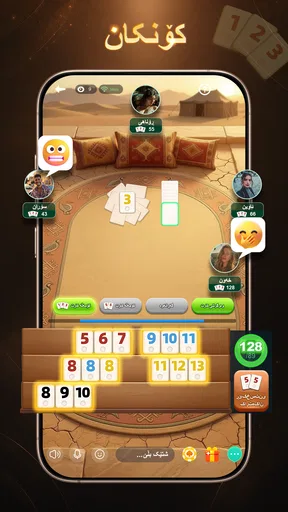


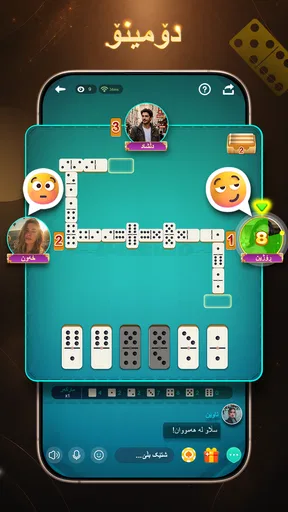

 Analysis by AppCompare
When a phone game depends on a live connection, the small pauses can shape the experience as much as the puzzles do. That is the angle I would keep in mind with Yari KonKan: its appeal, as presented, rests on playing and making friends, so it makes most sense when you have a reliable connection and time to interact. I wouldn’t choose it on the assumption that every part works without a network. If you’re looking for a social game to dip into between other things, the key question is whether its connected side fits your routine.
When play depends on being connected
The social promise sets a different expectation from a self-contained puzzle app. In a solo game, I can usually settle in and focus only on a level; in a social experience, the value also depends on other people being available and the connection cooperating. That can make a session feel lively when you’re ready to engage, but less predictable if you only have a few spare minutes and want an uninterrupted task.
I’d treat the connection as part of the experience rather than a background detail. Before settling down for a longer session, it’s sensible to open the app somewhere with dependable service and see how the activity you want to use behaves. If you’re choosing a game for a commute or a place with patchy reception, a known offline puzzle title is the safer pick. That is a practical distinction, not a knock on a social app: interaction is the point, but interaction needs the right conditions.
Fitting it into phone-sized moments
On a phone, social games compete with messages, calls, and the ordinary interruptions of the day. I’d approach Yari KonKan as something to check when I can give it a little attention, rather than as a guaranteed quick fix for every short wait. A brief session might suit a break at home or a quiet pause with steady Wi-Fi; a crowded trip, low signal, or a tight schedule can make a connection-dependent activity feel less convenient.
One useful habit is to decide what you want from a session before opening it: a short spell of play, or time to meet and interact with people. That small choice helps avoid tapping around while distracted, and it makes it easier to judge whether the app suits your own routine. For younger players, the Teen age rating is also worth taking into account when deciding whether the social setting is appropriate and when to play.
What to do when a session stalls
Connection hiccups are especially frustrating when an app combines play with social interaction, because it may be unclear whether to wait, try again, or leave the session. My low-risk approach is to pause briefly, check whether the phone still has a usable connection, and then reopen the activity rather than repeatedly tapping controls. If a moment of progress matters, I’d avoid assuming it has been saved until the app visibly returns to a stable state.
That cautious routine is useful beyond this title: it reduces accidental repeated actions and keeps a minor network wobble from turning into a bigger annoyance. It also points to a real trade-off. A connected experience can feel more communal than a solitary game, but it asks you to tolerate interruptions that a fully local game may avoid. If reliable access is hard to come by, that difference should weigh heavily in your choice.
Worth Reading Before You Choose

Baby Panda World Brings Quick Play to Modern Phones, but Its Game Library Feels Busy

ESPN’s Live Game View Makes Following Close Games Easier

QuizzLand Review: A Good Fit for Short Trivia Breaks, Not Every Player

Basketball Stars: Multiplayer Is Fast, but Can It Recover When Matches Go Wrong?

WEBTOON Turns Phone Updates Into a Better Reading Routine

Link to Windows Runs on Shared Habits, Not Social Feeds
Using mobile data deliberately
Because the experience is social, I’d be mindful about where and how I use it on a limited data plan. I wouldn’t assume that a short visit uses a particular amount of data, and I wouldn’t leave it running in the background just to see what happens. Starting a session on Wi-Fi is a sensible default if you want to be conservative; when using mobile data, keep an eye on your phone’s normal data controls and close the app when you’re done.
There’s also a people-and-attention cost to consider. A game that invites interaction can tempt you to stay longer than planned, so setting a small time boundary before starting can help keep it as a break instead of letting it take over one. That advice matters especially if you’re playing in public or around other people: choose a moment when you can focus, and don’t let a social session distract you from travel or everyday responsibilities.
What’s the Buzz About?
At first glance, Yari KonKan might seem like just another puzzle game. But trust me, it’s anything but ordinary. The game invites you into a world where every corner is filled with mystery and every puzzle piece is a key to unlocking a new story. What I found fascinating is how the developers have seamlessly blended traditional lore with modern gaming mechanics. This isn’t just about solving puzzles; it’s about immersing yourself in a narrative that unfolds with every move you make.
Diving Into the Gameplay
The gameplay in Yari KonKan is both challenging and rewarding. You start with simple puzzles that gradually increase in complexity. It’s like peeling layers off an onion – the deeper you go, the more intricate it becomes. What keeps you hooked is the way each puzzle is tied to a piece of the story. You’re not just playing; you’re unraveling tales woven into the very fabric of the game.
If you’re a fan of brain teasers, you’ll love the variety this game offers. From pattern recognition to logical deductions, each level presents a unique challenge. And let’s not forget the satisfaction that comes from cracking a particularly tough puzzle. It’s the kind of game where you might find yourself saying, “Just one more level,” late into the night.
Visuals and Soundtrack
Now, let’s talk about the aesthetics. The graphics are nothing short of stunning. The developers have paid meticulous attention to detail, ensuring that each scene is a visual treat. The color palette is rich and vibrant, adding depth to the game’s overall atmosphere. It’s like stepping into a beautifully illustrated storybook.
The soundtrack deserves a special mention too. It’s a mix of traditional and contemporary tunes that perfectly complement the game’s setting. Whether you’re solving a puzzle or exploring new areas, the music enhances the experience, making it more immersive and engaging.
User Experience
One of the aspects that stood out to me was the user interface. It’s intuitive and easy to navigate, which is crucial for a game that requires a lot of interaction. The learning curve is gentle, making it accessible for players of all ages. And for those moments when you’re stuck, the hint system is a lifesaver. It nudges you in the right direction without giving away too much, allowing you to enjoy the satisfaction of solving the puzzle independently.
Choosing it for the right reasons
The app is listed as a free social app from Social Game Lab, with a Teen content rating. It has a 3.0 average from 409 ratings, 14 written reviews, and over 100,000 installs. Those figures suggest a modest but established audience rather than a universally celebrated hit. I’d use that as context, not a verdict: social games are particularly sensitive to who is active and whether their style of play matches yours.
The current version is 3.21.2.ku, and it requires Android 6.0 or later. In-app purchases range from $0.49 to $99.99 per item, so “free” describes the starting point, not necessarily every optional purchase. I’d begin without spending, get a feel for the social side, and decide later whether any paid item has a clear value for how you play. That’s especially sensible if you’re trying it casually or setting it up for a teen.
For someone who likes combining a game with meeting other players, that mix may be the reason to try it. If your preference is a quiet puzzle with no social element, a conventional single-player brain teaser is likely a better fit. Those alternatives are easier to pick up in places with weak service and don’t rely on other people being around. Yari KonKan’s distinct appeal is the social context; it should be the deciding factor, not an assumption that it will behave like a purely offline puzzle app.
A realistic way to test the fit is to try a short session at home on Wi-Fi when you’re not in a rush. Notice whether the social interaction feels like a welcome part of play or a distraction from the puzzles, and whether the pace suits you. If you enjoy the combination, you can make it a deliberate evening or break-time activity. If you mainly want something dependable during a signal-poor commute, keep a separate offline game ready instead of expecting this app to fill that role.
Small habits that make a better session
I’d keep the first session simple: explore the basic flow, avoid buying anything immediately, and pay attention to how the app responds when you move between play and social activity. That gives you a useful baseline before you decide whether to spend time or money on it. If a puzzle slows you down, the hint system described in the gameplay can help; I’d use a hint after making a genuine attempt, so it guides rather than replaces the satisfaction of solving it.
It’s also worth matching the session to your surroundings. A quiet place and a stable connection make it easier to focus on a puzzle and any interaction that goes with it. In a noisy or busy setting, keep expectations modest and avoid starting something you’d be annoyed to interrupt. This is a small but meaningful trade-off: the app may suit planned downtime better than scattered seconds between tasks.
Parents and younger users may want to discuss the social aspect as well as the age label. The Teen rating gives a useful starting point, but it doesn’t tell you whether a particular person will enjoy the interaction or how they should manage their time. I’d make the first look together, agree on sensible spending boundaries, and decide whether the social experience feels comfortable before treating it as a regular pastime.
Where it fits among social games
Compared with a messaging app, Yari KonKan is centered on play rather than serving as a general-purpose way to keep in touch. Compared with a standalone puzzle game, it brings a social dimension that can make the experience feel less solitary, but it also introduces dependence on connectivity and other people’s availability. That makes it a more specific choice than either alternative: I’d recommend it to someone who wants their game time to include interaction, not to someone who merely wants puzzles or a dependable chat tool.
The most useful question to ask yourself is what you want the app to do on an ordinary day. If you want a reason to return to a game and enjoy the company around it, its combination may click. If you want a self-contained activity you can pause at any moment, a conventional puzzle title is less demanding. If your main goal is reliable conversation, a dedicated communication app is more direct. Choosing by that distinction is more helpful than judging it only by screenshots or by its average rating.
Connectivity verdict
My overall take is that Yari KonKan is best approached as a connected social game, not as a guaranteed offline companion. Its puzzle-and-story appeal gives play a sense of progression, while the social framing can add a reason to come back; in exchange, you need to be comfortable with the possibility that access and interaction depend on your connection and timing. I’d try it on Wi-Fi first, keep purchases optional, and see whether the social element genuinely improves the experience for you.
If that combination sounds appealing, it’s a reasonable free starting point for exploring a social game, with a Teen rating and optional in-app purchases to keep in mind. If you want complete independence from networks, predictable short sessions, or a purely solo challenge, I’d choose another kind of game instead. That is the clearest way to decide: pick Yari KonKan for the people-and-play mix, and skip it when dependable, interruption-free solo play matters more.
Why You Should Try It
If you’re still on the fence, let me give you a few reasons to give Yari KonKan a shot. It’s not just about the puzzles; it’s about the stories they tell. Each level unravels a part of the narrative, drawing you deeper into its world. It’s a refreshing break from the typical mobile games and offers a perfect blend of entertainment and mental stimulation.
Plus, it’s a great way to unwind. Whether you have a few minutes to spare or want to indulge in a longer session, the game adapts to your schedule. It’s perfect for those quick brain workouts or when you want to lose yourself in a captivating story.
In conclusion, Yari KonKan is a delightful addition to the world of mobile gaming. It’s engaging, beautifully designed, and offers a unique blend of puzzles and storytelling. So, why not give it a try? You might just find yourself enchanted by its charm, just like I did.
Pros
- Intuitive user interface design.
- Wide variety of game modes.
- Regular updates with new content.
- Engaging and challenging puzzles.
- Supports offline play mode.
Cons
- Occasional in-app purchase prompts.
- Some levels may feel repetitive.
- High battery usage during play.
- Requires a stable internet connection.
- Limited customization options.
FAQs for Yari KonKan - KonKan & domino
What is Yari KonKan and what makes it unique?
Yari KonKan is a captivating adventure puzzle game that combines stunning visuals with challenging gameplay mechanics. What sets it apart is its intricate storyline intertwined with a series of mind-bending puzzles. Players are drawn into a mystical world where every decision impacts the outcome, making each playthrough a unique experience.
Is Yari KonKan available on both Android and iOS platforms?
Yes, Yari KonKan is available for download on both Android and iOS platforms. This ensures that users with different device preferences can enjoy the game. The app is optimized to run smoothly on a wide range of devices, providing an immersive experience for everyone.
What are the system requirements to run Yari KonKan?
To run Yari KonKan smoothly, Android users need a device running Android 5.0 or higher, while iOS users should have iOS 10.0 or later. Adequate storage space is necessary for a seamless experience, as the game features high-quality graphics and extensive content.
Does Yari KonKan require an internet connection to play?
Yari KonKan does not require a constant internet connection, allowing players to enjoy the game offline. However, an internet connection is recommended for downloading updates and accessing certain features like leaderboards and in-game events that enhance the overall experience.
Are there any in-app purchases in Yari KonKan?
Yes, Yari KonKan offers in-app purchases that allow players to enhance their gameplay experience. These purchases are optional and include items like hints, additional puzzles, and cosmetic upgrades. Players can enjoy the core game without spending additional money, keeping the experience accessible to everyone.


